
Punjabi Winter Food: Saag, Gajrela, Pinni and What to Order
Punjabi winter food follows the cold-season harvest: mustard greens for sarson da saag, maize flour for makki di roti, red carrots for gajrela, plus peas, fenugreek, radish and cauliflower. Ghee, jaggery and nuts go into sweets like pinni and panjiri. On our menu, the seasonal Saag (₹275) and Gajrela, 100 g (₹75) carry the season.
Why does Punjab eat differently in winter?
Ludhiana’s winter nights get cold, and December and January often bring thick fog. Food changes to match. Kitchens cook heavier dishes, use more ghee and butter, and make sweets that are meant to be eaten a little at a time over weeks.
The vegetables change too. Summer gourds and okra give way to leafy greens, carrots, peas and cauliflower. In many Punjabi homes, the first big pot of saag marks the start of winter.
How are sarson da saag and makki di roti made?
Saag starts with mustard leaves, usually mixed with spinach and a wild green called bathua. The greens are chopped, boiled for a long time and mashed or churned until smooth. A spoon of maize flour thickens it. A final tempering of ghee, ginger, garlic, onion and green chilli goes on top, followed by white butter at the table.
Makki di roti is a flatbread made from maize flour. The dough has no gluten, so it cracks easily and is patted out by hand. It’s cooked on a griddle and eaten hot, often with jaggery and a glass of buttermilk on the side.
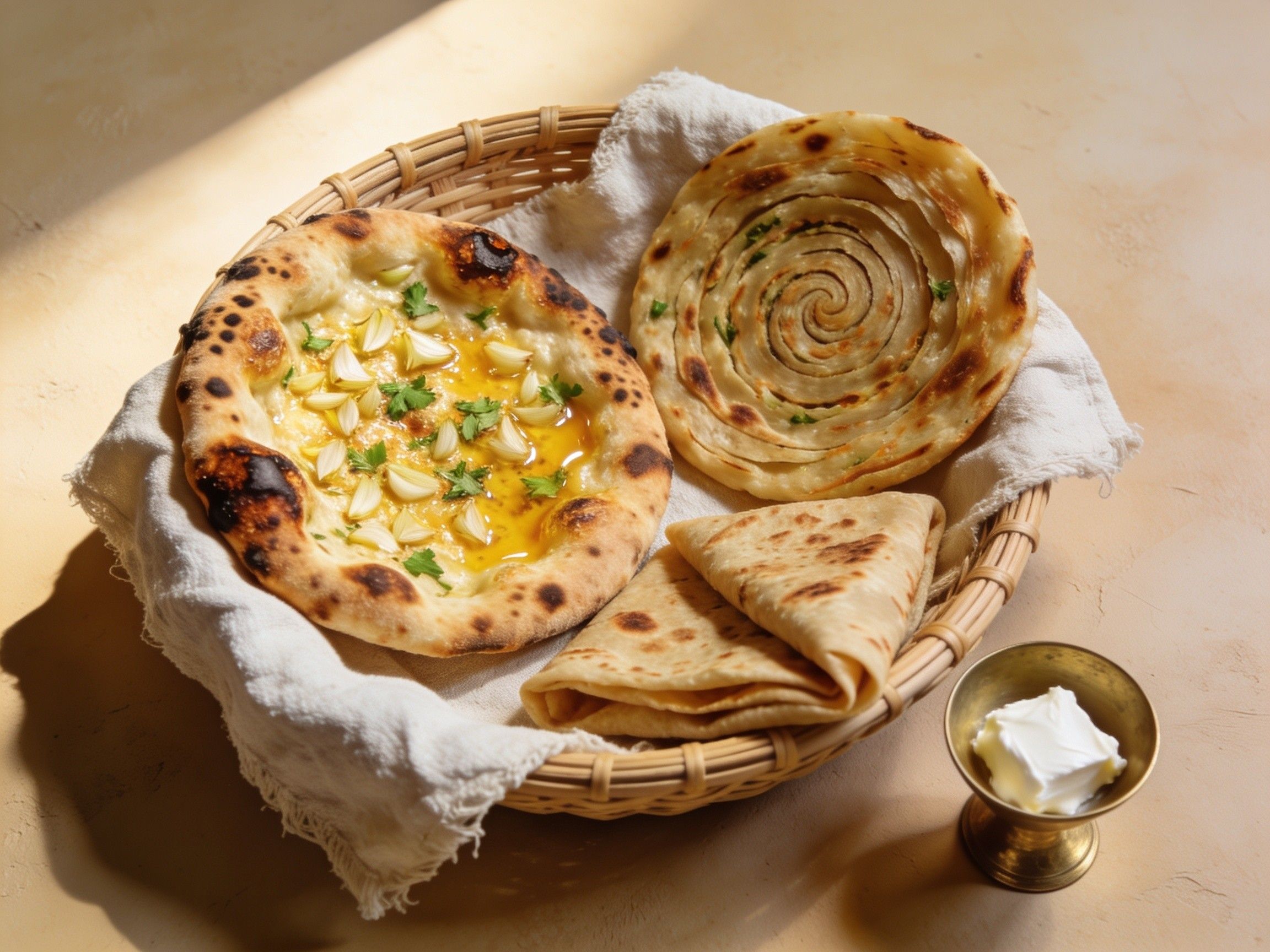
At Red Wood Farm, Saag (seasonal) is ₹275 on the menu. Makki di roti is not on our menu. Most guests pair the saag with Missi Roti at ₹30, Butter Roti at ₹25 or Tandoori Roti at ₹20. Add a Laccha Onion Salad at ₹125 and it makes a full winter meal.
Which winter sweets does Punjab make?
Gajrela. Grated red carrots are cooked slowly in milk until the milk disappears, then finished with sugar, ghee and dry fruit. Some families stir it for over an hour. Our Gajrela, 100 g (seasonal) is ₹75.
Pinni. Roasted wheat flour, ghee, sugar or jaggery and nuts, pressed into round balls. Families make a big batch and keep a tin in the kitchen all winter.
Panjiri. A loose, roasted mix of wheat flour, ghee, sugar and dry fruit, eaten by the spoonful.
Lohri treats. Around Lohri in January, homes hand out peanuts, popcorn, gachak and til rewari made with sesame and jaggery.
Pinni, panjiri and the Lohri treats are not on our menu. What we do have for a cold evening is Malpua Rabri (seasonal) at ₹65, Kesar Kheer at ₹75 and Gulab Jamun at ₹35. Our desserts page has more on our sweets. If you’re planning a Lohri get-together, read our Lohri celebration page.
What winter vegetables and parathas should you try?
Winter is paratha season. Cauliflower, radish and fenugreek all get stuffed into dough or kneaded into it, and a plate with curd and butter makes breakfast or a late lunch.
- Gobi Paratha with Butter: ₹55
- Mix Paratha with Butter: ₹55
- Aloo Paratha with Butter: ₹50
We don’t list a radish paratha.
Peas are everywhere in a Punjabi winter. Matar Methi, peas with fenugreek leaves, is ₹255, and Matar Pulao is ₹260. Spinach shows up in many dishes:
- Palak Paneer: ₹225 half, ₹295 full
- Palak Naan: ₹45
- Palak Chicken: ₹415 half, ₹695 full
- Palak Mutton: ₹325 half, ₹645 full
Bhartha, the mashed and spiced eggplant dish, is ₹230.
Hot dishes for a cold evening
When the temperature drops after sunset, people start with a soup. Our Tomato Shorba and Hot & Sour are ₹145 each, Sweet Corn Soup is ₹155, and the non-veg Smoked Chicken soup is ₹265.
Mutton is another cold-weather favorite in Punjabi homes. Mutton Rogan Josh is ₹345 half and ₹645 full, and Shahi Mutton is ₹325 half and ₹695 full.
Fried and spiced fish is a classic winter order across Punjab. Our menu marks its whole fish section as seasonal. When it’s on, Tawa Fish Fry is ₹565 and Fish Tikka Masala is ₹575.
Straight from the tandoor, Tandoori Chicken (₹375) and Paneer Tikka (₹375) arrive hot, which matters on an open lawn in December.
What does “seasonal” mean on our menu?
A few dishes on our menu carry the word seasonal: Saag, Bhindi, Gajrela, Malpua Rabri and the fish dishes. It means they’re cooked when the ingredients are right, and availability can change from week to week. If you’re driving out for one particular dish, send us a message on 096467 13555 first and we’ll tell you whether it’s on.
All our prices include GST.
Eating winter food on the lawn
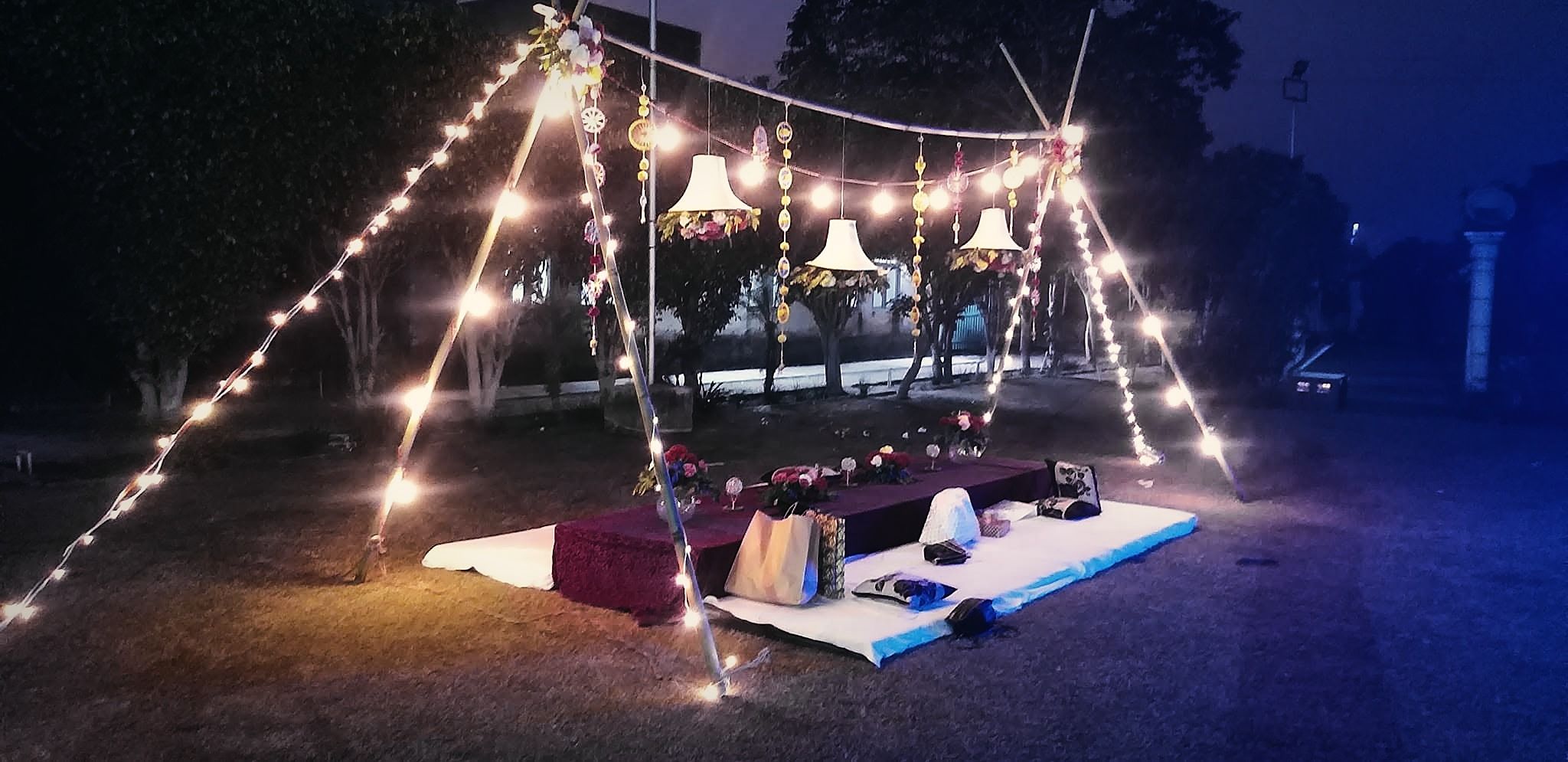
Red Wood Farm is a garden restaurant with dining tables on an open lawn, under string lights and palms wrapped in fairy lights. On winter evenings that’s part of the appeal. Dress warmly and bring a shawl for older relatives. Our page on winter evenings on the lawn has more on dining outdoors after dark.
You’ll find us at 676, VPO Daad, on Pakhowal Road, opposite Cerajot Tiles. We’re open every day from 10:00 AM to 11:00 PM. Book a table by message or phone with your date, time and number of guests. For the year-round Punjabi favorites, see our Ludhiana food guide.
Questions people ask
Is gajrela the same as gajar halwa?
Yes. Gajrela is the Punjabi name for the slow-cooked carrot and milk dessert. Ours is sold as Gajrela, 100 g (seasonal) at ₹75.
Does Red Wood Farm sell pinni or panjiri?
No. Neither is on our menu. For a warm winter dessert, try Malpua Rabri (seasonal) at ₹65 or Kesar Kheer at ₹75.
Can I take saag home from Red Wood Farm?
We do takeaway when you order by phone or message on 096467 13555. Saag is seasonal, so ask first whether it's being cooked that day.
Which month does saag season start in Punjab?
Mustard greens are a cold-season crop in Punjab, so homes start cooking saag as the weather turns cool in late autumn and keep at it through the winter.
Ask us
Send the date, time and number of guests. For anything not on this page, such as capacity or party prices, we reply with current details.